I finally see what the professors were getting at when they said Reverse Polish Notation (RPN) was better. For a simple calculator it really is. You can do really complicated math without stopping to clear things out for order of operations. It’s neat to see what engineers used back in the 80’s as well. That said it does take a bit of getting used to, it feels cumbersome at first but once you get used to it, it’s really neat.
I finally see what the professors were getting at when they said Reverse Polish Notation (RPN) was better. For a simple calculator it really is. You can do really complicated math without stopping to clear things out for order of operations. It’s neat to see what engineers used back in the 80’s as well. That said it does take a bit of getting used to, it feels cumbersome at first but once you get used to it, it’s really neat.
Works fine. The metal faceplate, however, is rough and feels cheap, unfinished.
Works fine. The metal faceplate, however, is rough and feels cheap, unfinished.
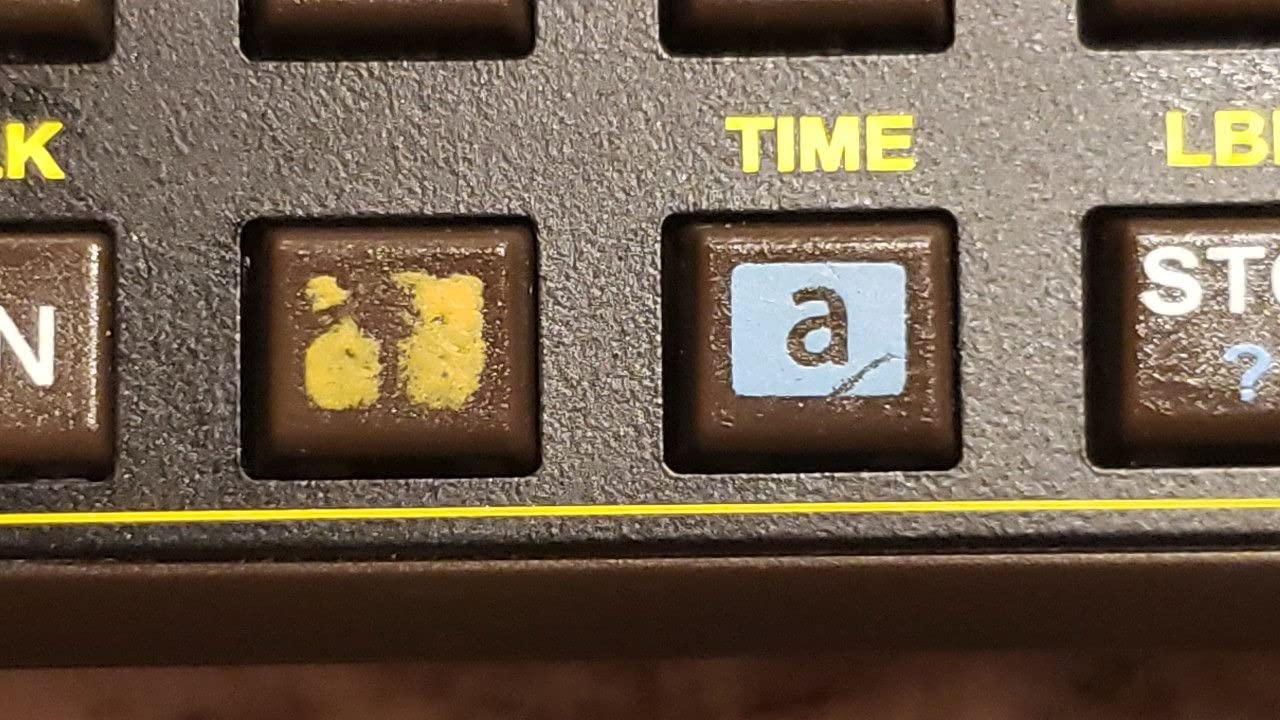
This is my second Swiss Micros calculator. I have had the DM-16 for years and love the credit card size and the fact that it is a perfect clone of the HP-16 but with added features. Now I just received my DM41L a few days ago and getting familiar with it. Not an easy task because Swiss Micros website pretty much has manuals for the HP versions of this calc and not much on the actual calculator itself. I am slowly getting familiar with it.I am disappointed that after only two days use, the printing on two of the most used keys is already rubbing off. (see photo). It looks like they manually printed these two keys with a poor quality paint that cannot handle more than a few presses. This would be an awesome device but it looks like someone took a short cut to get this out the door (which by they way, took a month to get here from Europe).